
If you’ve noticed a musty attic smell drifting through your Vermont home, you’re far from alone. It’s one of the most common concerns we hear from homeowners across southern Vermont.
Vermont’s long winters, heavy snow loads, repeated freeze-thaw cycles, and humid summers create conditions that are hard on attics. In older homes, which are common here, the problem tends to occur more often and more severely.
In most cases, a musty attic smell points to a fixable building issue. And addressing it usually makes your home more comfortable in the process. You can’t see the difference, but you can feel it.
Why Does My Attic Smell? Common Causes in Vermont Homes
Attic odor problems in Vermont have specific causes rooted in our climate and housing stock. Most of the homes we work in were built decades before modern air sealing standards existed, and Vermont’s winters are long and demanding. That combination creates conditions that allow moisture to build up in attics year after year.
The three most common culprits we find in the field:
1. Trapped Moisture and Condensation from Vermont Winters
During the heating season, warm air inside your home rises. If there are gaps or unsealed penetrations in your ceiling, warm, humid air can migrate into the attic.
Once there, it meets the underside of your roof sheathing, which in January can be well below freezing. The moisture condenses on the cold wood surface, much as a cold glass of water fogs up on a warm day.
Over a Vermont winter, this cycle repeats for five or six months straight. The result:
- Saturated roof sheathing and rafters
- Soaked insulation
- Ideal conditions for mold and mildew
By the time spring arrives, homeowners often notice that unmistakable musty smell for the first time. Homes built 50 to 150 years ago, like many in Dummerston, Putney, Newfane, and Townshend, often lack sufficient air sealing between the living space and the attic, which makes this worse.
2. Inadequate or Aging Insulation
Insulation plays two roles in preventing attic moisture problems: maintaining a thermal boundary and reducing how much warm, humid air reaches cold surfaces. When it’s old or insufficient, both break down.
| Role | What Happens When It Fails |
| Maintains thermal boundary between living space and attic | More heat escapes upward, warming the roof deck unevenly and contributing to condensation and ice dams |
| Resists moisture absorption | Old fiberglass batts absorb and hold moisture, lose insulating value, and become a breeding ground for mold |
Many Vermont homes still have their original insulation, material that is decades past its useful life and well below current performance standards.
For Vermont attics, we recommend modern cellulose insulation. Here’s why it’s a good fit:
- ✅ Fills gaps and irregular framing cavities more effectively than batts
- ✅ Resists moisture absorption
- ✅ Treated with borates that naturally discourage mold and pests
- ✅ Made from recycled materials
3. Ice Dams and Roof Leaks Unique to Northern New England
Ice dams are a distinctly northern New England problem. Here’s how they form:
- Heat escapes into the attic through inadequate insulation and air sealing
- It warms the roof deck, melting snow on the upper portion of the roof
- Meltwater runs toward the eaves, which stay cold since they extend beyond the heated envelope
- Water refreezes at the eaves, forming a dam of ice
- Backed-up meltwater gets forced under shingles and into the roof assembly
These leaks can be small and intermittent. You may never see a visible drip or water stain. But over multiple winters, even minor ice dam leaks create persistent moisture inside the attic structure.
If your attic smells musty but you don’t see obvious water damage, hidden ice dam leaks are a likely suspect.
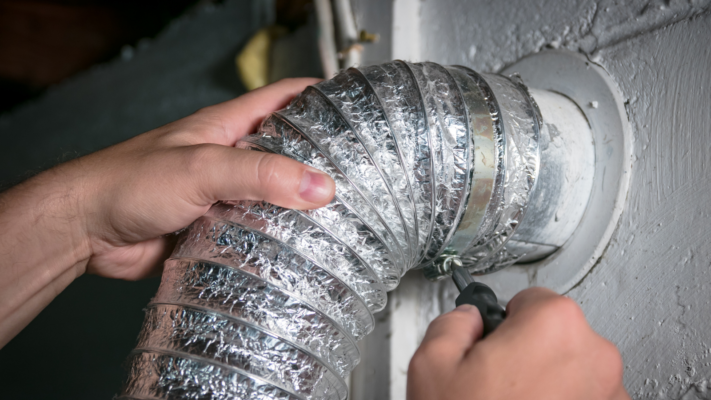
That Attic Smell Coming Through Vents: What’s Going On?
Many homeowners first notice the smell not in the attic, but in their living room, bedroom, or bathroom. That means attic air is getting into your living space and into the air your family breathes every day
Three pathways that bring attic odors into your home:
| Pathway | How It Works | What to Check |
| Duct condensation | HVAC or exhaust ducts running through an unconditioned attic sweat when warm air meets cold surfaces. Mold grows inside and blows into rooms. | Inspect ducts: Look for moisture stains or soft spots. |
| Unsealed ceiling penetrations | Recessed lights, exhaust fan housings, register boots, and plumbing stacks create gaps that let musty attic air leak directly into living spaces. | Check for air movement near ceiling fixtures. A lit incense stick can reveal leaks. |
| Negative pressure | Exhaust fans and combustion appliances create suction that pulls attic air downward through any unsealed openings. | Notice if the smell gets stronger when kitchen or bath fans run. |
This Is More Than an Unpleasant Smell
If musty attic odors are reaching your living space, it’s an indoor air quality problem, not just an inconvenience.It’s worth taking seriously if anyone in your household has:
- Allergies
- Asthma
- Respiratory sensitivity
- Young children or older adults in the home
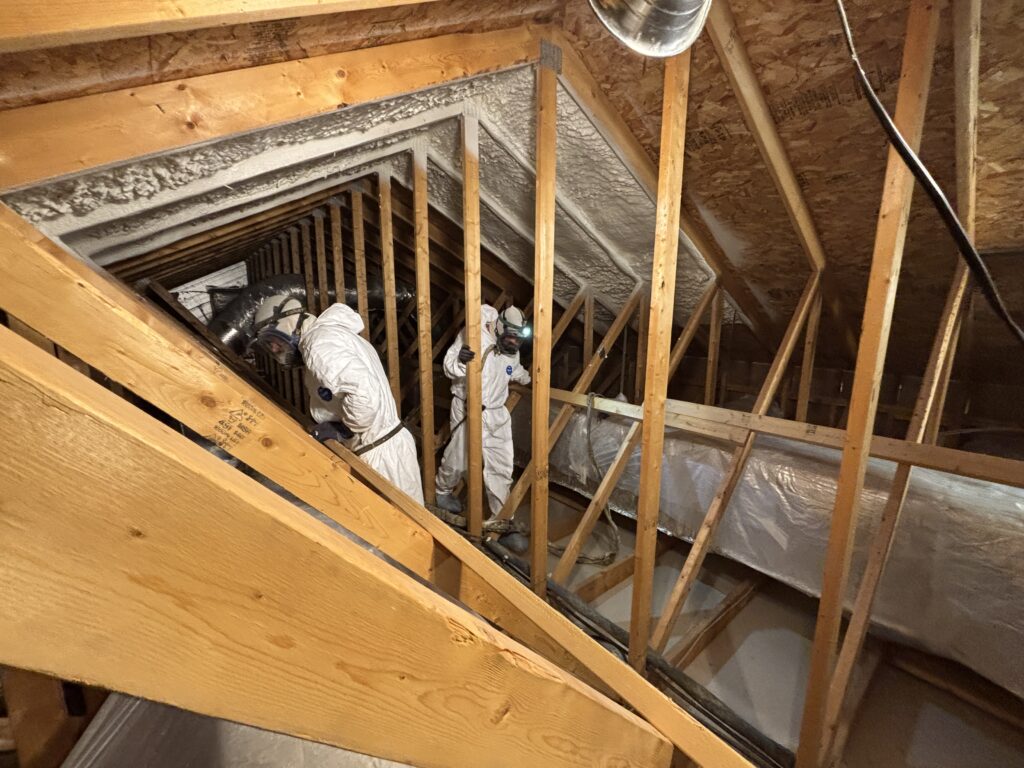
How Vermont’s Climate Makes Attic Odors Worse
Most online guides don’t account for Vermont’s specific conditions. Here’s why our climate puts more stress on attics than most of the country.
H3 Seasonal Extremes vs. The National Average
| Factor | Most of the U.S. | Vermont |
| Heating season length | 2–3 months | 6+ months (Oct–Apr) |
| Winter humidity dynamics | Mild indoor-outdoor contrast | Extreme: dry indoor heat, frozen attic surfaces |
| Freeze-thaw cycles | Occasional | Repeated throughout winter and spring |
| Summer attic temps | Warm | Very high, combined with high outdoor humidity |
Vermont’s freeze-thaw cycles are especially damaging. Water seeps into a tiny crack in roof flashing, expands as it freezes, widens the gap, and penetrates deeper with each thaw. This slow process creates moisture entry points that go undetected for years.
Older Home Construction in Southern Vermont
Southern Vermont’s housing stock is full of character: antique capes, farmhouses, connected barns, Victorian-era homes. These were built long before modern building science existed.
Common construction features that create attic moisture problems today:
- Balloon framing: allows air to move freely from the basement to the attic through open wall cavities
- No vapor barriers: nothing stops moisture-laden air from passing through ceilings and walls
- No air sealing: the practice simply didn’t exist when these homes were built
These aren’t flaws. They’re just how things were built. Older homes in Windham County, Bennington, and surrounding areas respond well to proper air sealing and insulation when the work is done right.
How to Get Rid of a Musty Attic Smell for Good
A musty attic smell is a symptom of a building performance issue. Here’s the approach we recommend, in order of priority:
Step 1: Schedule a Professional Energy Audit
Before spending money on any fix, you need to know exactly what’s happening in your attic. A professional energy audit takes the guesswork out. It uses:
- Blower door test: measures how airtight your home is and locates leaks
- Thermal imaging: shows exactly where heat is escaping and where moisture is accumulating
You get a clear picture of your home’s actual conditions and a prioritized list of what to address.
We provide diagnostic testing and energy audits across southern Vermont. Efficiency Vermont incentives are still going strong and can help offset the cost. Programs are updated monthly, so check what’s available today.
Step 2: Air Seal and Re-Insulate the Attic
Air sealing comes first. Every penetration in the ceiling plane gets sealed:
- Light fixtures and electrical boxes
- Plumbing stacks
- Duct boots
- Attic hatches
- Interior wall top plates
This single step makes the biggest difference in reducing attic condensation and the odors it produces.
Then comes insulation. Once air leaks are sealed, high-quality insulation maintains a consistent thermal boundary between your living space and the cold attic above.
Fiberglass batts vs. cellulose insulation in Vermont attics:
| Fiberglass Batts | Cellulose Insulation | |
| Fills irregular cavities | ❌ Gaps around framing | ✅ Conforms completely |
| Moisture resistance | ❌ Absorbs and holds moisture | ✅ Resists moisture absorption |
| Mold resistance | ❌ Can become a breeding ground | ✅ Treated with borates |
| Vermont climate fit | ❌ Poor | ✅ Excellent |
The result: Rooms tend to stay warmer in winter and cooler in summer. Addressing the moisture source is typically what resolves the smell.
Step 3: Ensure Proper Attic Ventilation
A well-insulated and air-sealed attic still needs to breathe. Balanced attic ventilation, soffit vents at the eaves plus ridge venting at the peak, allows residual moisture to escape before it builds up on the roof sheathing.
When insulation is added, soffit vents must not be blocked. Proper installation includes ventilation baffles (also called chutes) that keep an air channel open from the soffit to the attic space above the insulation. It’s a small detail, but it matters for long-term performance.
When a Musty Smell Means a Bigger Problem
Many musty attic smells resolve through air sealing and insulation. But occasionally, the situation needs a professional assessment before any work begins. Get an expert in if you notice:
- Dark staining on the ceiling drywall
- Sagging or bubbling paint
- Soft spots on the ceiling
- Worsening allergies or respiratory symptoms in family members
These can indicate active mold growth or a significant structural moisture problem. We can identify insulation and air sealing issues as part of the assessment. If mold remediation or structural repair is needed, we can connect you with other qualified professionals in the area.
Keeping Your Vermont Home Comfortable and Odor-Free
Addressing a musty attic smell often delivers benefits beyond eliminating an odor:
- More comfortable home: warmer in winter, cooler in summer
- Lower energy bills: less heat escaping through the attic
- Better indoor air quality: fewer mold spores and allergens circulating through your living space
- Protected home structure: less long-term moisture damage to sheathing, rafters, and insulation
If cost is a concern, Efficiency Vermont weatherization incentives are still going strong. Programs are updated monthly, so check what’s available today. We walk every customer through the rebate process.

Why Vermont Homeowners Choose Farnum Insulators
When your home has a musty attic smell, you need someone who can find the problem, explain it clearly, and fix it the right way.
We’re Chad and Amelia Farnum, based right here in Dummerston. We’ve built this company around honest assessments, quality work, and results you can actually feel. Our team knows Vermont’s older homes because we’ve worked in them for years, across Windham County and the surrounding area.
What you can expect when you work with us:
- A thorough energy audit before any work begins: no guesswork, no upselling
- Air sealing and insulation work performed by an experienced local crew
- Guidance through Efficiency Vermont incentives so you’re not leaving money on the table
- A home that’s quieter, more comfortable, and free of that musty smell
Every project starts with an honest conversation. Give us a call at (802) 387-5005.
FAQs
Why does my attic smell musty only in certain seasons?
The smell tends to be most noticeable in late winter and early spring, after months of moisture have built up in the wood and insulation. As temperatures warm, that moisture can activate mold and mildew. You may also notice it in summer if outdoor humidity is getting into a poorly ventilated attic.
Can a musty attic smell make my family sick?
It can be a concern. If attic air is reaching your living space, it may carry mold spores and allergens. This is worth taking seriously, especially for household members with allergies, asthma, or respiratory sensitivity.
Will adding more insulation fix the smell?
Not on its own. Insulation alone won’t stop warm, moist air from entering the attic. Air sealing needs to come first. Once the air leaks are addressed, the right insulation, cellulose in most Vermont attics, helps maintain the thermal boundary that keeps the moisture cycle from starting again.
How do I know if the smell is coming from my attic vs. somewhere else?
A few indicators: the smell is stronger near ceiling fixtures, attic hatches, or in rooms directly below the attic. If it gets stronger when exhaust fans run, that’s a sign of negative pressure pulling attic air down. A professional energy audit with a blower door test gives you a definitive answer.
Are there rebates available to help cover the cost?
Efficiency Vermont weatherization incentives are currently active. Check what’s available for your home here. We’ll walk you through it.