
Choosing between cellulose and fiberglass insulation can feel confusing, especially in an older home in Vermont or New Hampshire. Both materials help keep your home warm, and each one works better in certain parts of the house.
That’s why, when homeowners ask us about cellulose vs fiberglass insulation, we look at each area of the home on its own. In this guide, we go room by room so you can see which option fits best and why.
Start Here: What Kind of House Are You Insulating?
Before getting into each room, it helps to know what each material is and how the age of your home affects the choice.
Cellulose insulation is made from recycled paper and treated to resist fire and pests. It’s blown into attics or packed tightly into walls. Fiberglass insulation is made from spun glass fibers and usually comes in batts or as loose fill.
Here’s what usually works best based on the type of home:
| Your home | Common issue | What usually works best | Why |
| 1800s farmhouse, balloon framing | Cold air travels through the walls up to the attic | Cellulose in the attic and walls | It fills uneven spaces and helps slow drafts |
| 1940s to 1960s Cape | Cold upstairs rooms and tight spaces near the roofline | Cellulose, plus air sealing around the knee walls | It adds more R-value in tight spaces |
| 1970s to 1990s ranch or Colonial | Thin original attic insulation | Air sealing, then cellulose over the existing layer | It brings the attic up to the recommended level |
| New build with open framing | Open walls before the drywall goes up | Cellulose behind netting (fiberglass batts also work) | It fills around wiring and helps slow drafts |
| Any home with a damp basement | Moisture at the foundation | Spray foam | It handles moisture better than cellulose or fiberglass |
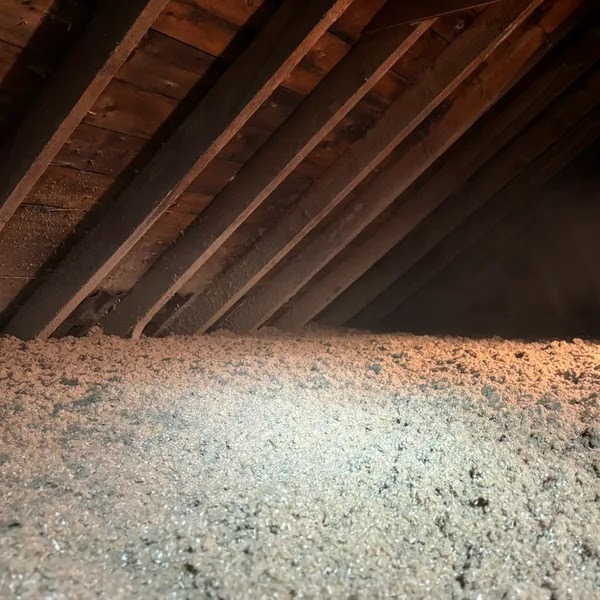
The Attic Floor: Where Depth and Air Leaks Decide It
The attic is a great place to start, since it’s where most heat escapes in a New England home. It’s also where the difference between fiberglass and cellulose insulation is easiest to see.
For our climate, ENERGY STAR recommends R-60 for an uninsulated attic, or R-49 if there are already 3 to 4 inches of insulation up there. R-value measures how well insulation slows heat loss, so a higher number means better performance.
Cellulose has a higher R-value per inch than fiberglass, so it needs less depth to reach the same goal:
| Target | Cellulose | Fiberglass |
| R-49 | About 13 to 15 inches | About 18 to 22 inches |
| R-60 | About 16 to 19 inches | About 22 to 27 inches |
Based on settled R-values from the U.S. Department of Energy, compiled by the PNNL Building America Solution Center.
That difference matters near the edges of the attic, where the roof comes down low and space is tight. Cellulose also slows air movement better than loose fiberglass. Fine Homebuilding notes that this helps cellulose perform better than its lab R-value suggests, especially in drafty attics.
Verdict: Cellulose is the better choice for most attics. If you’re wondering which is better, fiberglass or cellulose blown-in insulation, the attic is where cellulose stands out most. Learn more about our cellulose insulation services.
Existing Closed Walls: Dense-Pack Territory
Insulating existing walls works a little differently, since the plaster or drywall is already in place. Instead of opening up the walls, the insulation is blown in through small holes and packed tightly into each space. This method is called dense-pack cellulose, and it’s the standard approach for older homes in cold climates.
Here’s how a typical wall project works:
- Check the walls for empty or partly filled spaces, often with a blower door test and infrared scan.
- Make sure there’s no old knob-and-tube wiring inside. Green Building Advisor advises against installing cellulose around it.
- Drill small holes, either from the outside or the inside of the house.
- Blow cellulose into each space until it’s tightly packed.
- Plug and patch the holes, then check again for any gaps.
Fine Homebuilding notes that careful installation is key, since loose spots can form around wires and outlets if the job is rushed.
Verdict: Cellulose.
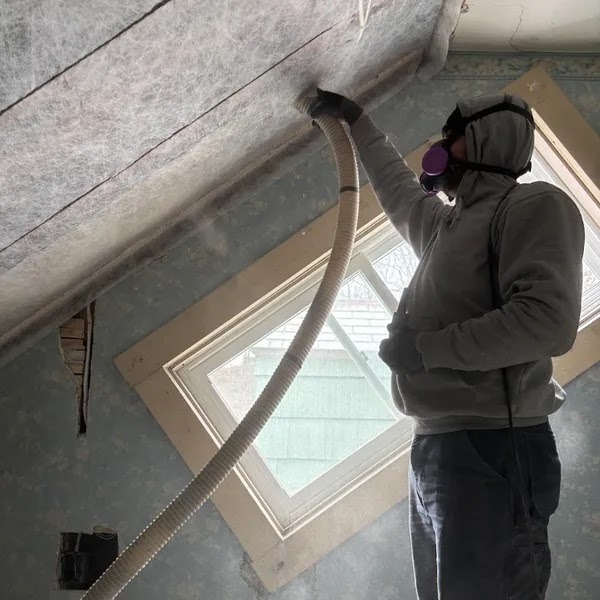
Cathedral Ceilings and Knee Walls: Only as Good as the Install
Sloped ceilings in finished attics and Cape-style upstairs rooms tend to be some of the coldest spaces in the house. There isn’t much room for insulation between the roof and the ceiling, so every inch matters.
In the Journal of Light Construction, an expert with years of weatherization experience in Vermont explains that cellulose must be densely packed to prevent settling and moisture damage, which requires skilled installers.
Knee walls are the short walls between an upstairs room and the attic space behind it. They’re often the reason those rooms feel cold. Air sealing and insulating behind them usually makes a bigger difference than adding more insulation to the main attic floor.
Basements and Rim Joists: Skip Both
Basements are the one place where we usually recommend neither cellulose nor fiberglass. Foundation walls in New England homes are often damp, and loose insulation against them can hold moisture.
Spray foam is a better fit here because it insulates and seals air leaks in one step. That’s why we use cellulose in the attic and spray foam for damp basements and rim joists, the wooden frame that sits on top of the foundation. You can learn more about our basement insulation services.
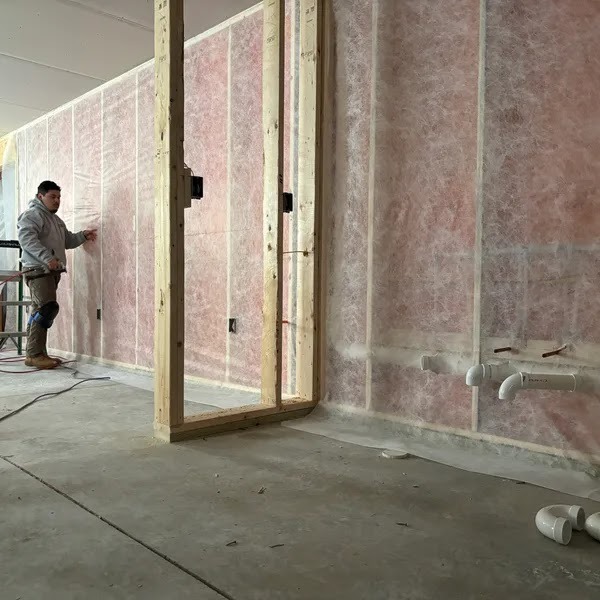
New-Construction Walls: Fiberglass’s Best Case
New homes are different because the walls are wide open before the drywall goes up. This is where fiberglass batts work best, since they’re quick and easy to install.
Cellulose can also be used in new walls. It’s blown in behind a mesh netting that holds it in place. Here’s how the two compare:
- Fiberglass batts: Lower material cost and quick to install, though they can leave gaps around wires and outlets.
- Cellulose behind netting: Takes a bit more prep, and it fills the whole space, including around wires and outlets.
Verdict: Both can work in new construction. For a well-sealed home in our cold climate, cellulose usually comes out ahead.
Four Myths About Cellulose, Checked Against the Data
Cellulose has had a few misconceptions attached to it over the years. Here’s what the research says.
Myth: Cellulose settles so much it stops working.
Fact: Loose cellulose does settle about 10% to 20% over time, more than fiberglass. Experienced installers account for this by adding extra depth, so the attic still reaches the right R-value after it settles.
Myth: Cellulose is a fire hazard because it’s made from paper.
Fact: Cellulose is treated with fire retardants, and some studies suggest it may even help slow a fire. Fiberglass doesn’t burn either, so both are safe when installed correctly.
Myth: Cellulose leads to mold.
Fact: Cellulose is treated to help prevent mold, and it performs well in dry spaces like attics and walls. Damp areas are where spray foam is the better choice.
Myth: Insulation work has to wait for warm weather.
Fact: Dense-pack cellulose can be installed even when it’s freezing outside.
What a Winter Project Costs After 2026 Rebates
The cost of an insulation project depends more on your home than on the material you choose. Air sealing and removing old insulation usually affect the final price more than the insulation itself.
The good news is that rebates can cover a big part of the cost:
| Program | What it offers | Who qualifies |
| Efficiency Vermont | 75% of project costs, up to $7,000 | Low- and moderate-income Vermont households (higher-income households: 75%, up to $2,000) |
| NHSaves Home Performance | Rebates on insulation and air sealing after an energy assessment | Eligible NH utility customers; amounts vary by utility |
| Federal tax credit | None for insulation installed in 2026 | Not available |
Efficiency Vermont updates its programs regularly, so it’s a good idea to check what’s available for your home today. Our team can also help you find the incentives that apply to your project.
Tip: Most rebate programs require testing before and after the work. Book your assessment first, then schedule the installation.
The Short Version for New England Homeowners
In most New England homes, cellulose is the better choice for attics and existing walls, while spray foam is the right fit for damp basements.
We’ve been helping homeowners across southern Vermont and western New Hampshire stay comfortable since 2003. It all starts with a free estimate, where our team visits your home and recommends the best option for each space. If you’d like a closer look, blower door and infrared testing are available as an add-on.
You can’t see the difference, but you can feel it.
Schedule Your Free Insulation Estimate or give us a call at (802) 387-5005.
Frequently Asked Questions
Is fiberglass insulation better than cellulose?
For most attics and existing walls in Vermont and New Hampshire, cellulose is the better choice. Fiberglass works best in new construction, when the walls are still open.
Can you mix cellulose and fiberglass in the same attic?
Yes. Adding cellulose on top of existing fiberglass is very common, as long as the old insulation is dry and in good shape. Before adding new insulation, we air seal the attic floor wherever we can reach it.
Does cellulose insulation attract mice or insects?
Cellulose is treated to resist pests as well as fire. To keep mice out, it’s still important to seal any openings around the foundation and roofline.
How long does a cellulose insulation project take?
It depends on the size of your home and which areas are being insulated. Attic work is usually the quicker part, while insulating existing walls takes a bit longer.
Is it safe to stay home while cellulose is installed?
Yes, you can usually stay home while cellulose is installed. Before leaving, our crew cleans up the work area so your home is ready to enjoy.